美国controlair代理商
在气动控制领域拥有 30 多年的创新和经验
美国原装进口
ISO-9001:2015注册质量体系

Pressure Regulator vs. Back Pressure Regulator: What’s the Difference and When to Use Each
In many industrial and pneumatic systems, pressure control is essential. But not all pressure regulators are created equal. Two of the most commonly used devices—pressure regulators and back pressure regulators—perform very different roles. Choosing the right one depends on where you need to control pressure in your system.
In this post, we’ll explain the key differences between a pressure regulator and a back pressure regulator, highlight typical applications, and help you determine which is best for your system.
What Is a Pressure Regulator?
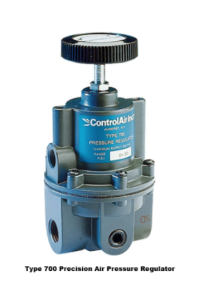
A pressure regulator (also known as a pressure reducing regulator) is used to control downstream pressure. It is installed upstream of the equipment that requires consistent, reduced pressure. Its main function is to take high inlet pressure and reduce it to a controlled, lower outlet pressure.
As the downstream pressure drops, the pressure regulator opens to allow more flow. As pressure builds back up, it closes to maintain the desired setpoint.
Common Pressure Regulator Applications:
· Supplying compressed air to pneumatic tools
· Delivering controlled pressure to process instruments
· Maintaining stable gas pressure in distribution systems
Bottom line: A pressure regulator ensures that what comes after it in the system receives a steady, manageable pressure.
What Is a Back Pressure Regulator?
A back-pressure regulator works in the opposite direction. It controls upstream pressure, ensuring that pressure on the inlet side of the valve does not exceed a set level. When the upstream pressure gets too high, the back pressure regulator opens to bleed off excess pressure.
This type of regulator is typically installed downstream of the area where pressure needs to be maintained. Think of it as an adjustable relief valve that keeps upstream systems from becoming over-pressurized.
Common Back Pressure Regulator Applications:
· Controlling pressure in closed-loop systems
· Maintaining pressure in chemical reactors or tanks
· Regulating pump discharge pressure
· Managing backflow in return lines
· Flow controllers
Bottom line: A back-pressure regulator protects the system by holding pressure in, then releasing it only when it rises too high.
Which Regulator Do You Need?
Choosing between a pressure regulator and a back-pressure regulator depends entirely on your system’s requirements:
· If your goal is to deliver a consistent pressure to a downstream device or process, use a pressure regulator.
· If you need to maintain a minimum pressure level in a vessel, loop, or upstream line, a back-pressure regulator is the right choice.
Need Help Selecting the Right Pressure Regulator?
Whether you’re trying to maintain steady output pressure or control upstream pressure build-up, ControlAir can help. We offer a full range of pressure regulators and back-pressure regulators designed for high performance in demanding industrial environments.
Let us know your application, and we’ll recommend the right solution.